On August 2, 2027, a total solar eclipse will trace a narrow path of totality across the southern tip of Spain, several countries in northern Africa, the Arabian Peninsula, and the Horn of Africa. To experience the total phase of the eclipse, or "totality," you must be located within this narrow path of totality, with the duration of totality lasting the longest at the centerline. But where along the path should you plan to go? Below, we've outlined some of the unique features, landmarks, and viewing options along the path of totality.
Note that there are several countries along the path of totality that most western governments warn their citizens against traveling to due to various safety and security risks. Since practically nobody will be planning eclipse trips to these countries, we haven't included overviews for them. Note also that some western governments also warn their citizens against traveling to certain areas of some of the countries that we have included overviews for and that the path of totality may be inside some of those areas. For more information on what areas may pose a risk, and for current travel guidance, please visit the U.S. State Department's Travel Advisories page.
Remember that you must use special eclipse safety glasses or viewers at all times during the partial phases of a total solar eclipse. The NationalEclipse.com Eclipse Store offers a wide variety of certified safe eclipse glasses and viewers.
Note that times and durations can vary widely even within the same city and some cities are located only partially within the path of totality. All times and durations noted on this page are only representative samples and should be used for general comparison purposes only. To determine the precise start time, end time, and duration of totality for your exact location on eclipse day, use the interactive eclipse maps developed by Xavier Jubier.
Note that the eclipse path gradually changes its direction from east to south as it travels across the planet. To avoid confusion, note that references made below to the "northern" or "eastern" limits or lines of the eclipse refer to the top/right edge of the path and references made to the "southern" or "western" limits or lines of the eclipse refer to the bottom/left edge of the path.
The total eclipse of August 2, 2027, is born during sunrise in the middle of the Atlantic Ocean about halfway between North America and Africa. Dubbed the "Eclipse of the Century" by some, this eclipse will be remembered for its extremely long duration of totality. At its point of greatest duration, the Sun will be completely obscured by the Moon for an incredible 6 minutes and 23 seconds—only about a minute less than the theoretical maximum for a total solar eclipse on Earth. There won't be a longer total eclipse until 2114.
Approximately 20 minutes after touching down in the ocean, the Moon's shadow begins its supersonic race across southern Spain. This is the second total solar eclipse in as many years for Spain. But while the 2026 eclipse crossed over a large portion of the country, the 2027 path of totality only skirts the extreme southern coast of Spain—the southern reaches of the Andalusia region—as it tracks west-to-east through the Strait of Gibraltar. The centerline of the eclipse, where durations last the longest in any one place, bypasses Spain entirely. Only the northern side of the path scrapes along the bottom of the country. Ironically, though, the maximum duration of totality for Spain in 2027 is more than double what it was in 2026. Due to the long duration of totality of the 2027 eclipse overall, durations in excess of 4 minutes can still be enjoyed even miles away from the centerline on the southern tip of Spain.
The eclipse crosses over the oceanside city of Cádiz, where totality will last for about 2 minutes and 56 seconds starting at around 10:45am CEST. A little farther north, and closer to the edge of the path, is Jerez de la Frontera, where observers can expect about 1 minute and 45 seconds of totality in the center of the city.
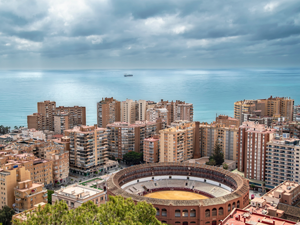
On the Mediterranean side of the country, the entirety of Spain's Costa del Sol is enclosed within the path. Marbella is one of the cities along this coastline and it's far enough away from the edge of the path for a totality duration that breaks the 3-minute mark at 3:17. Farther along the coast is Málaga, the largest city located inside the path of totality in Spain. However, Málaga is located relatively close to the edge of the eclipse path, resulting in a duration of totality that lasts only about 1 minute and 53 seconds downtown. One of the last cities in Spain to receive a dose of darkness on eclipse day is Roquetas de Mar. Again, as is the case with many of the Spanish cities lucky enough to be inside the path, it's rather close to the edge and totality will last for only about 1 minute and 35 seconds in the center of town.
In terms of duration, the best place to be in Spain is at the very tip of the Iberian Peninsula, where the bottom of the country extends out into the Strait of Gibraltar and comes closest to the eclipse centerline. At this very tip of land is the city of Tarifa, where totality will last for an extremely generous 4 minutes and 39 seconds.
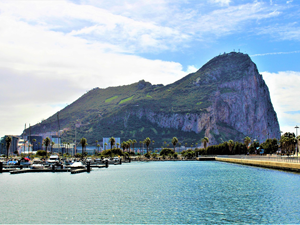
Besides Spain, the 2027 eclipse crosses over one additional country on the European continent—kind of. The British Overseas Territory of Gibraltar, along with its famous rock, is located far enough south on the Iberian Peninsula for a 4-minute-plus eclipse. If you're standing on the top of the Rock of Gibraltar at exactly 10:45am CEST on August 2, you'll see darkness descend for 4 minutes and 27 seconds over the Mediterranean, the Strait of Gibraltar, and even Africa.
As far as weather is concerned, the eclipse weather forecasting experts report that this eclipse promises very favorable viewing prospects along much of its track. As we'll see farther along the path, clear skies are almost guaranteed in certain areas. Here in Spain, the prospects aren't quite as perfect, but still very encouraging. Inland sites have the greatest chances for clear skies during the morning hours when the eclipse occurs, while the possibility of clouds increases somewhat along the coastlines.
(hover or tap to see points of interest in Spain)
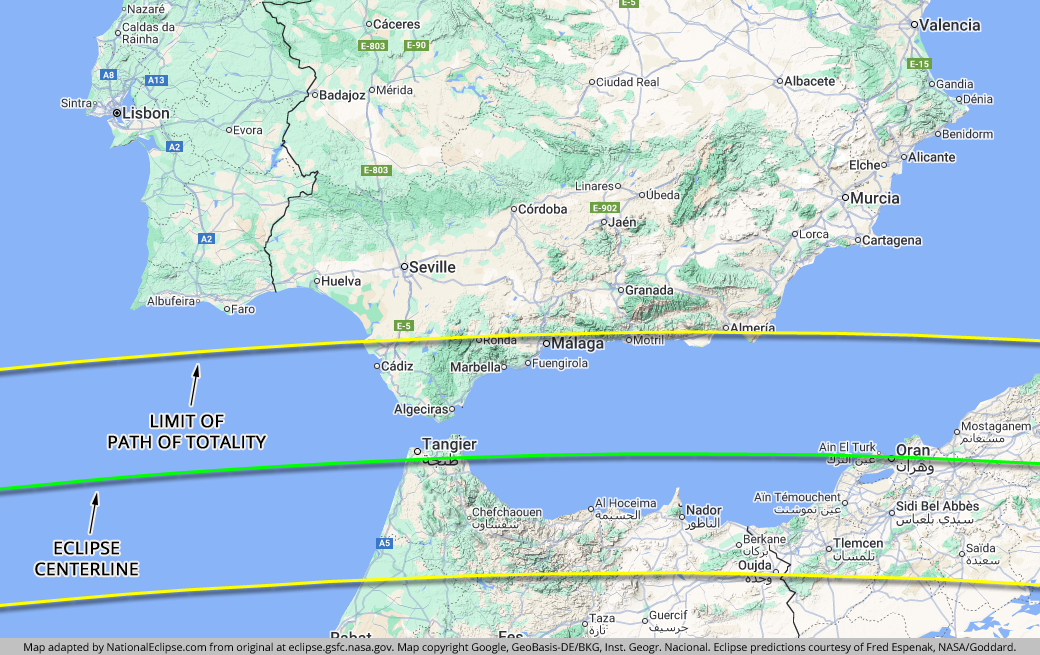
As the path of totality sweeps in from the Atlantic Ocean, it crosses over the northern reaches of Morocco. As with Spain, the path doesn't cross over a lot of the country, but Morocco is the first nation along the path of the 2027 eclipse that benefits from the ultra-long durations that can be experienced at and near the centerline. For all total solar eclipses, the duration of totality increases along the centerline up until it reaches its point of greatest duration and then begins to decrease on the other side. Even this early on, still more than 2,000 miles away from that maximum point, durations on the centerline here in Morocco are already approaching the 5-minute mark.
In fact, the centerline passes just south of Tangier, one of the largest cities in the country. At approximately 9:44am WEST, the Sun will go dark in Tangier for about 4 minutes and 51 seconds, one of the longest durations possible in the country. On the other side of the Tangier Peninsula, and on the other side of the centerline, is the large city of Tétouan, where totality will last for around the same amount of time as in Tangier. At the top of the peninsula at the eastern end of the Strait of Gibraltar is Ceuta, an autonomous city of Spain, where eclipse chasers can expect a totality duration of about 4:48.
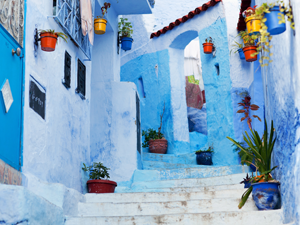
About halfway between the centerline and the southern limit of the eclipse path is the tourist-popular "Blue City" of Chefchaouen. Even here, relatively far removed from the maximum durations on the centerline, the total phase of the eclipse will still last for over 4 minutes—about 4 minutes and 14 seconds in the center of the town. It's a good illustration of how for this particular eclipse, you don't necessarily need to be on or near the centerline for what most veteran eclipse chasers would consider a fantastic duration of totality.
Farther along the path, the eclipse encounters a few more large cities on the northeastern side of Morocco. At this point, the centerline of the eclipse is out at sea, having left the country for good after its brief journey across the Tangier Peninsula. South of the centerline on the Mediterranean coast is Nador, where totality will last for around 4 minutes and 16 seconds. Just above Nador is Melilla, the second of the two Spanish autonomous cities in Morocco. Melilla is slightly closer to the centerline, so totality clocks in a bit higher at 4:34. Along the border with Algeria is the large Moroccan city of Oujda. Unfortunately, Oujda sits right on the edge of the path, with totality only lasting for about 1 minute and 4 seconds in the center of the city and dropping quickly the farther south you go. Some sections of Oujda on the southern side of the city are actually outside of the path.
As with Spain, the eclipse watching weather prospects in Morocco are generally good. Clouds could pop up along the coastlines, while inland areas have a very good chance of clear skies on eclipse day.
(hover or tap to see points of interest in Morocco)
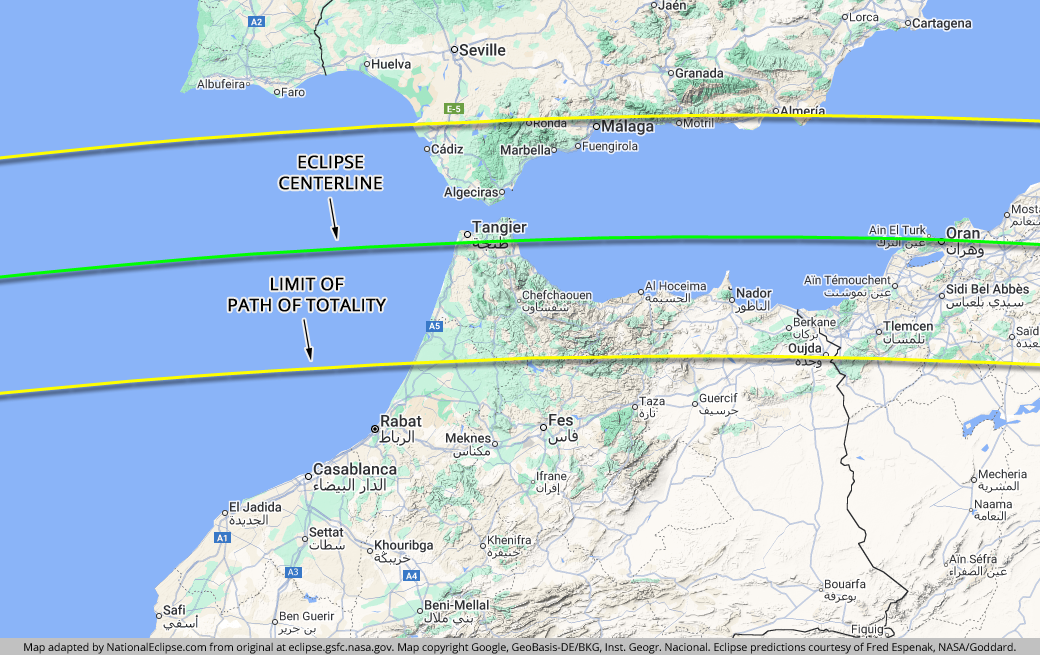
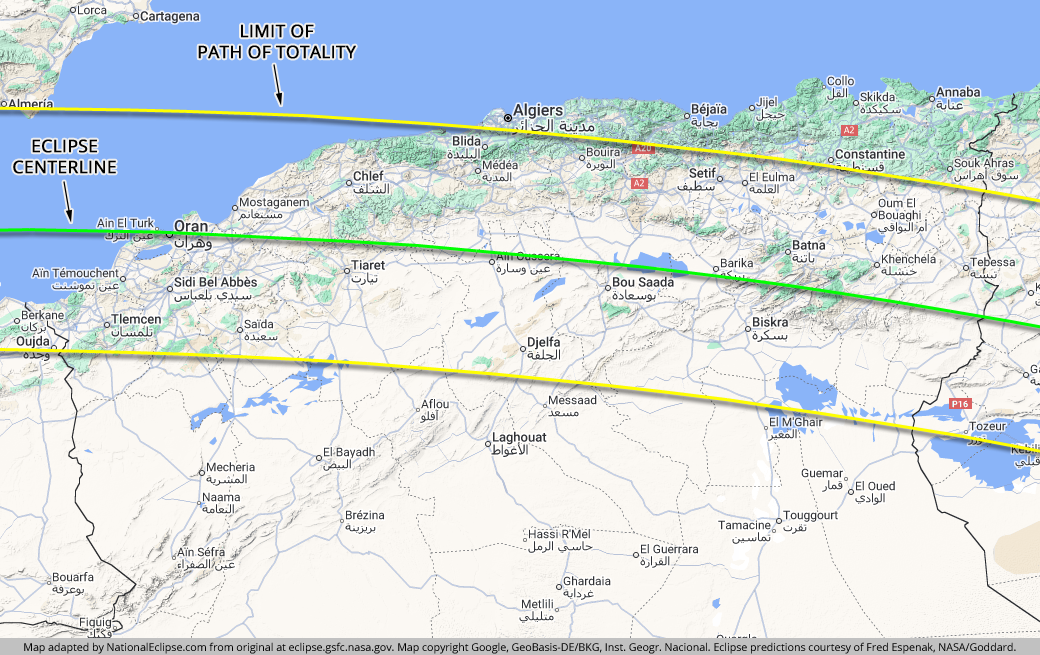
When the eclipse path arrives in Algeria, it's far enough along in its journey that 5-minute-plus durations have been established at the centerline. The eclipse moves through the northern parts of this large nation, crossing over many sizeable cities, but just missing the capital of Algiers.
As of this writing, the U.S. State Department maintains a Level 2 "Exercise Increased Caution" advisory for Algeria, which is the same as that for many European nations. However, certain parts of the country are explicitly labeled as Level 4—"Do Not Travel"—due to safety and security issues. One of these areas, along the border with Tunisia, is located inside the path of totality. Specifically, the advisory recommends avoiding travel to rural areas within 31 miles of the border with Tunisia. There is also a warning to avoid overland travel in the Sahara Desert, but the eclipse path mainly remains north of the Sahara, save for some desert areas along the southern half of the path. In general, the State Department suggests that when moving around Algeria visitors should travel with reputable travel agents who know the country. For full and up-to-date details and travel guidance, please visit the U.S. State Department's Travel Advisories page for Algeria.
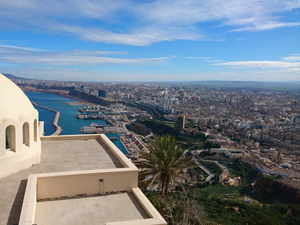
As the centerline of the eclipse enters Algeria after a quick trip across the Alboran Sea, it makes a beeline for Oran, the second largest city in the country. At about 9:51am CET, observers in Oran will be treated to approximately 5 minutes and 8 seconds of totality. South of Oran, the eclipse crosses over Tlemcen and Sidi Bel Abbès, where totality will last for around 3:12 and 4:34, respectively. Farther along, more large cities are in the path. On the northern side, Chlef will get about 4 minutes and 35 seconds of totality while on the southern side Tiaret is close enough to the centerline to get 5:05.
As mentioned, the path of totality barely misses Algeria's capital and largest city, Algiers. It passes just south of the city and prevents the residents of Algiers from experiencing a full total solar eclipse within the city limits. Just south of Algiers is the city of Blida. Blida is relatively close to the edge of the path, but still far enough away for a duration lasting 2 minutes and 50 seconds. Way down on the other side of the eclipse path near the southern limit of the totality zone is Djelfa, which can expect a duration of totality of about 3 minutes and 26 seconds.
Not to be left out, several other fairly large cities are positioned inside the path as the eclipse tracks eastward across northern Algeria. Bordj Bou Arréridj, Sétif, and Batna are located on the northern side of the path with totality durations of 4:14, 3:23, and 5:17, respectively. On the opposite side, Bou Saâda will get 5:17 and Biskra will get 5:03.
In Algeria, the prospect for clear skies follows the same pattern as seen earlier on. Inland areas offer the best chances for sunny conditions while coastal areas are somewhat less certain. The mountain ranges of northern Algeria could also increase the chances of clouds under the right conditions. In addition to clouds, the other risk for an eclipse that tracks across desert regions comes from dust and sand storms. Unless a dust storm is very bad, a hazy eclipse viewing would likely still be possible, but the threat of a severe sand storm in Algeria can't be discounted.
(hover or tap to see points of interest in Algeria)
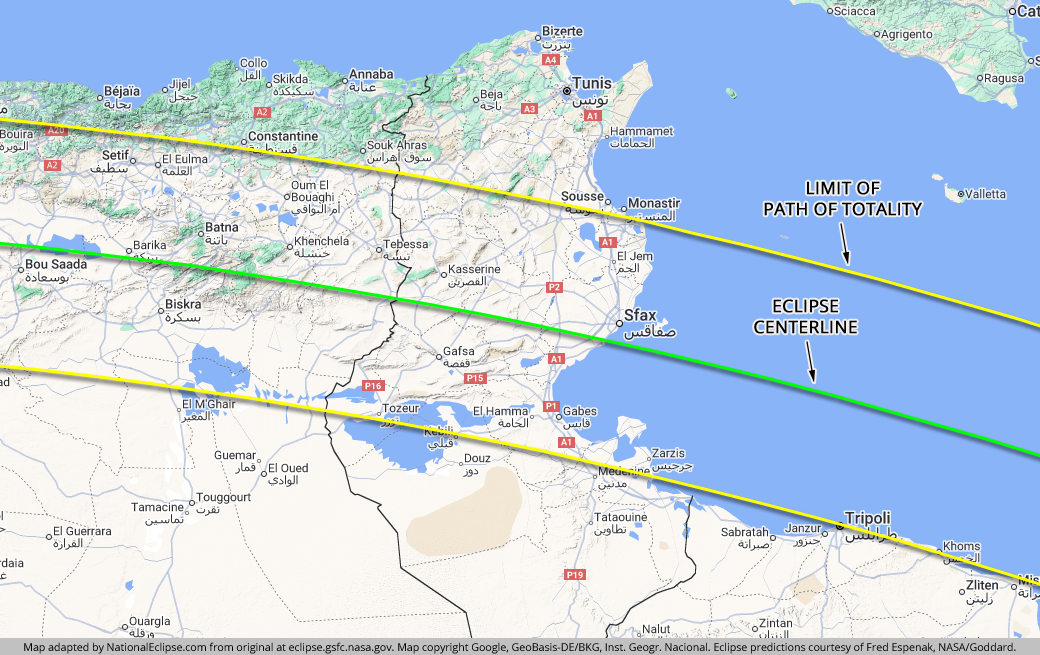
The 2027 eclipse path next encounters Tunisia as it continues its trek across North Africa. The path more or less bisects the center of the country and, as with Algeria to the west, misses Tunisia's capital city of Tunis.
Also as with Algeria, as of this writing, the U.S. State Department maintains a Level 2 "Exercise Increased Caution" advisory for Tunisia, while at the same time labeling certain parts of the country as Level 4 "Do Not Travel" areas for safety and security reasons. And again, travelers should be aware that some of these areas are located inside the path of totality. Regarding these areas, the advisory warns against traveling to within 10 miles of the border with Algeria; Mount Chaambi National Park, Mount Salloum, Mount Sammamma, and Mount Mghila; and the Orbata Mountains. For full and up-to-date details and travel guidance, please visit the U.S. State Department's Travel Advisories page for Tunisia.
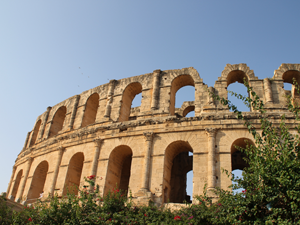
Among the cities located inside the path of totality in Tunisia is Kairouan, which sits relatively close to the northern limit of the path and will get about 2 minutes and 45 seconds of totality. El Djem, with its massive ancient Roman amphitheater, will experience 4 minutes and 25 seconds of totality. Closer to the centerline is Sidi Bouzid, which will enjoy a very generous 5 minutes and 31 seconds of daytime darkness. On the southern side of the path is Gafsa, where totality will last for about 5:10.
Along Tunisia's Mediterranean coast is Sfax, the country's second-largest city. Sfax is located very close to the centerline, resulting in a totality duration of 5 minutes and 39 seconds starting at about 10:08am CET. South of Sfax along the scooped-out section of Tunisia's shoreline is Gabès, which will get around 4 minutes and 8 seconds of totality. Beyond Gabès, the eclipse crosses over Tunisia's Djerba Island.
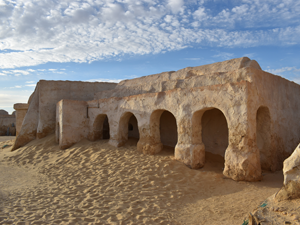
For Star Wars fans who might dream of experiencing the otherworldly phenomenon of a total solar eclipse from one of the very locations in Tunisia used in the film franchise for the fictional planet Tatooine, some—but not all—of those film sets can be found inside the path of totality. Many of them are located along the southern limit of the eclipse path, near the town of Tozeur. The location known as "Star Wars Canyon," where many iconic scenes were filmed, will receive over three minutes of totality. For a lucky few, it will be a surreal experience to stand in a place imagined as another planet as the eclipse transforms the landscape into what can only be described as an alien world. Since many of these sites are remote, your best bet is to join a tour organized by one of the companies that specialize in taking visitors to these Star Wars film locations. Along the Tunisian coastline, Djerba Island also hosts several Star Wars locations.
The chances for cloud-free skies along the path of totality in Tunisia on the morning of the eclipse are excellent. The possibility of clouds might increase slightly along the Mediterranean coastline, but overall eclipse chasers really can't ask for better eclipse viewing prospects here. Nevertheless, as is the case in Algeria to the west, a dust or sand storm at the wrong time could threaten a successful eclipse viewing in Tunisia.
After the eclipse leaves Tunisia, it heads out into the Mediterranean and then crosses over parts of Libya. It misses most of Tripoli while the centerline crosses directly over Benghazi. Most western governments, including the United States, Canada, the United Kingdom, and Australia, all strongly warn their citizens against traveling to any part of Libya for any reason. But after Libya, the next country along the eclipse path is one that many people consider the true dream destination of the 2027 total solar eclipse.
(hover or tap to see points of interest in Tunisia)
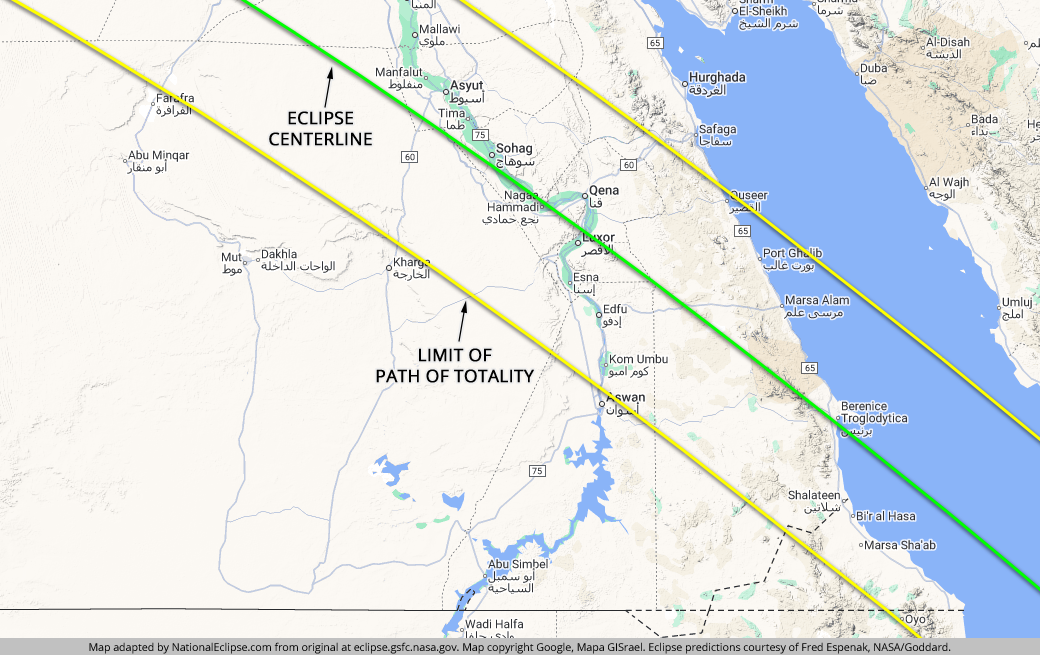
Many people would probably place Egypt near the top of their travel bucket list. But when you combine all that Egypt has to offer with a total solar eclipse, it becomes an almost irresistible destination for some. Imagine witnessing the ancient wonder of totality from the Valley of the Kings or the Luxor Temple or from a Nile River cruise. And if that weren't enough, Egypt is the place where the eclipse reaches its incredible maximum duration of 6 minutes and 23 seconds, when the centerline crosses the Nile just north of Luxor. Plus, the chances for clear skies in August are all but a certainty. The 2027 eclipse, or any eclipse for that matter, doesn't really get any better than it does in Egypt.
Once again, we must outline the safety and security considerations when traveling to Egypt. For some time, the U.S. State Department had maintained a Level 3 "Reconsider Travel" advisory for Egypt. In 2025, that was upgraded to a more reassuring Level 2—"Exercise Increased Caution." But as of this writing, Egypt is still saddled with a few areas labeled with Level 4 "Do Not Travel" warnings and some of those areas fall within the path of totality. However, these Level 4 areas—the Western Desert and Egyptian border areas—are rarely, if ever, visited by tourists anyway and heeding these warnings won't prevent travelers from witnessing the eclipse from the famous tourist sites that most people do want to visit. For full and up-to-date details and travel guidance, please visit the U.S. State Department's Travel Advisories page for Egypt.
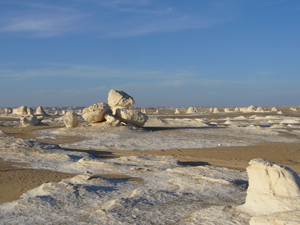
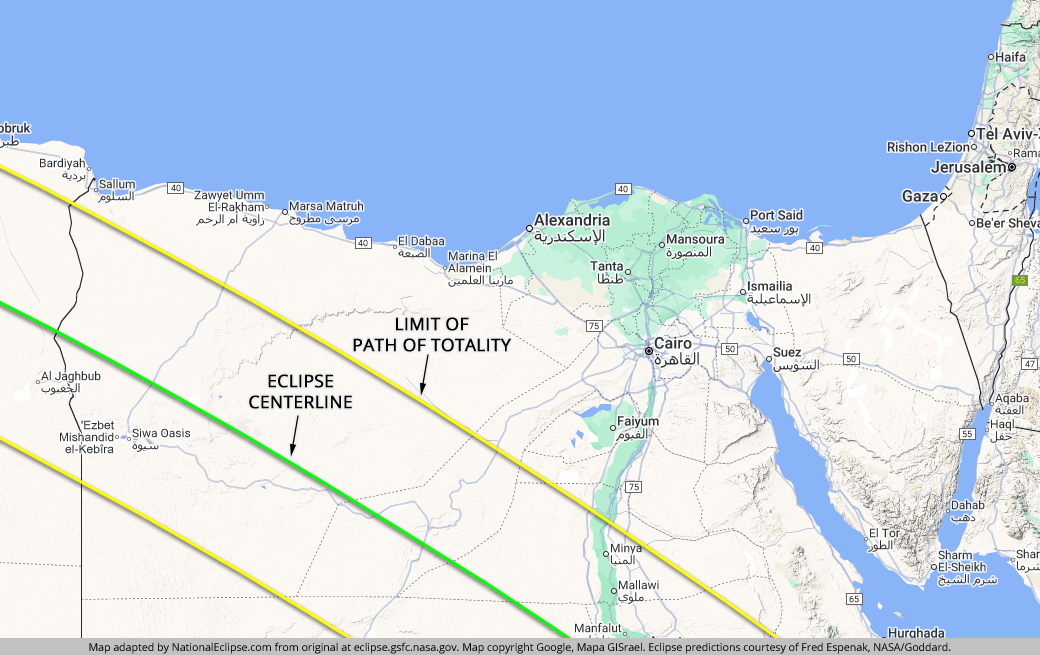
Before it gets to the plethora of ancient Egyptian wonders on the eastern side of the country, the path of totality travels through miles of mostly barren desert. In the far west of Egypt, the eclipse passes over the Siwa Oasis, an isolated desert oasis town known for its ancient ruins and local Berber culture, where totality will last for about 5 minutes and 31 seconds. Much farther east and along the southern, or western, limit of the eclipse path is White Desert National Park, the site of bizarre desert rock formations. Both of these desert sites are very much off the beaten track and typically visited only by adventurous travelers looking for something different than the usual attractions frequented by tourists. They are both also located in the Western Desert, which the U.S. State Department's travel advisory for Egypt designates as a Level 4 "Do Not Travel" area, as already mentioned. The advisory asserts that if you visit these sites, you should travel with a professionally licensed tour company only. We mention these areas, not because we suggest or recommend that you go there, but because they are noteworthy places inside the path of totality that some intrepid travelers do visit.
When it does arrive in eastern Egypt, the path of totality passes south of Cairo, Egypt's capital city and the largest city in Africa. If you were hoping to witness totality hovering over the Great Pyramid of Giza or the Sphinx, that won't be possible. Cairo will still get a 95 percent partial solar eclipse, but even a 99 percent partial comes nowhere near the magnificence of a full total solar eclipse. Many people will begin their Egyptian eclipse adventure in Cairo, and then venture down to the upper Nile River Valley for the show in the sky.
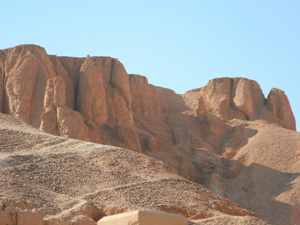
The eclipse path slices diagonally from northwest to southeast across the Nile River, crossing over some of the most amazing archeological treasures on Earth. On the west bank of the Nile, opposite Luxor, is the Valley of the Kings, where the ancient Egyptians entombed their pharaohs, including Tutankhamun. On the other side of the river in the city of Luxor is the Karnak Temple Complex, a vast open-air museum and one of the largest temple complexes in the world. Luxor Temple is also located in the city of Luxor. Since the centerline of the eclipse passes only about 5 miles north of the city, and reaches its point of greatest duration just a little bit farther along in its track, all of these must-visit sites in the Luxor area will experience just about the longest possible duration of totality anywhere on Earth. In the Valley of the Kings, totality will last for about 6 minutes and 21 seconds starting at about 1:01pm EEST. At the Karnak Temple Complex, it's approximately 6:22. At Luxor Temple, around 6:21.
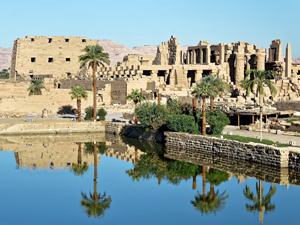
Many of the larger cities inside the path of totality happen to be located along a stretch of the Nile that flows in a diagonal parralel to the slanting centerline. You could almost imagine that the Nile knew where the centerline would be and changed course to follow it for awhile. One of these cities is Asyut, where totality will linger for 6 minutes and 6 seconds. Even closer to the centerline is Sohag, with a duration lasting approximately 6 minutes and 22 seconds, just a second short of the eclipse maximum. Qena gets about 6:10 while observers in Luxor itself will be able to bask in the shadow of the Moon for around 6 minutes and 21 seconds. Unfortunately, Aswan sits just outside of the western line of the eclipse path and will get a deep partial solar eclipse only.
As veteran eclipse chasers know, clouds are always the number one threat to a successful eclipse viewing and their appearance at the wrong time can ruin months and even years of eclipse travel planning. This threat should be extremely low in Egypt on August 2. The weather experts insist there is almost a zero chance of clouds in Egypt on eclipse day—and the meteorological data they rely on back these claims up. Of course, when it comes to weather, nothing is guaranteed. And, as is the case everywhere in northern Africa, dust and sand storms are possible in Egypt. In addition, while not impacting eclipse visibility, the summer months in Egypt are extremely, even dangerously, hot. But overall, Egypt is about as close as you can get to perfect weather prospects for an eclipse viewing.
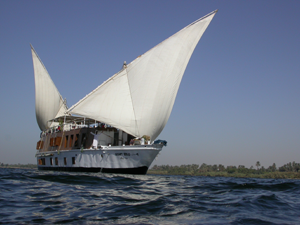
To assist with logistics and facilitate access to archeological sites, many tourists who visit Egypt opt to travel with an organized tour group. Many of these tours start in Cairo and then head south via air or rail to Luxor or Aswan and transfer to a multi-day Nile River cruise. These cruises are typically aboard medium-sized motorized riverboats or relatively small traditional dahabiya sailboats. Many tour companies are organizing special eclipse tours that include the major sites in Cairo and then a Nile cruise for both sightseeing and eclipse viewing. The NationalEclipse.com 2027 Eclipse Cruises page features the most comprehensive online list of Nile River cruises scheduled for the 2027 eclipse. For tours that don't include a cruise, see our 2027 Eclipse Tours page.
About 30 miles beyond where the path of totality crosses the Nile, it reaches its "point of greatest duration," that magical spot along every total solar eclipse path centerline where the duration of totality lasts the longest for that particular eclipse. At this exact spot in the desert, totality will last for an incredible 6 minutes and 23 seconds. The eclipse then continues on to the west coast of the Red Sea. At the small resort town of Marsa Alam, with its sandy beaches and crystal clear waters, totality will last for about 5 minutes and 28 seconds.
Before leaving the African continent and crossing the Red Sea, the eclipse skims a very small portion of Sudan. Sudan is another country that the U.S. State Department classifies as Level 4—"Do Not Travel." In any case, this part of the eclipse path is extremely remote and isolated and wouldn't have been sought out by eclipse travelers anyway.
(hover or tap to see points of interest in Egypt)
(hover or tap to see points of interest in Egypt)
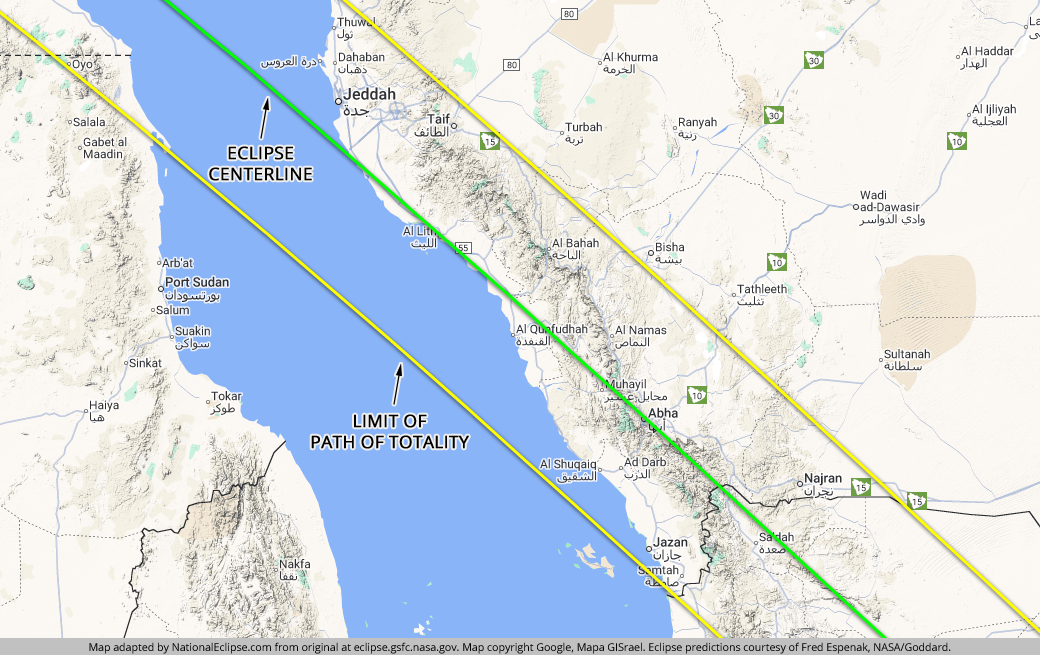
When the eclipse path arrives in Saudi Arabia after a quick journey across the Red Sea from Egypt, it flies in on a southeasterly heading, skimming the southwestern coast of the country. Here in Saudi Arabia, the last feasible eclipse destination for travelers, the path crosses over the country's second-largest city and promises outstanding durations of totality near the centerline. At the same time, the security situation in Saudi Arabia is currently complex and only time will tell what the travel outlook might look like by the time eclipse day arrives.
In 2026, the U.S. State Department changed its travel advisory for Saudi Arabia from the more or less standard Level 2 "Exercise Increased Caution" to a Level 3 "Reconsider Travel." This was due to the threat of missile and drone strikes on the country following the start of U.S. hostilities with Iran. At the time of this writing, the Level 3 advisory is still in place. In addition, the U.S. maintains a Level 4 "Do Not Travel" warning for the Saudi-Yemen border area, part of which is inside the path of totality. Even in the best of times, Saudi Arabia probably didn't come to mind for most people as a mainstream travel destination. Because of this, and especially if the security situation doesn't improve before August 2027, it certainly won't turn out to be a top spot for the 2027 eclipse. Nevertheless, durations along the centerline in Saudi Arabia remain in excess of 6 minutes for the length of the eclipse's journey across the country. Even if visitors don't come, the Saudis themselves will be treated to a spectacular eclipse show. For full and up-to-date details and travel guidance, please visit the U.S. State Department's Travel Advisories page for Saudi Arabia.
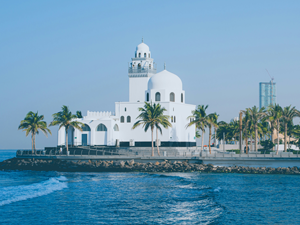
As it makes its way down the Arabian coastline, the shadow path divides itself roughly in half between land and sea. Notably, before heading inland, the centerline of the eclipse runs along a fairly long stretch of beaches and coastline, increasingly recognized here for clear waters and coral reefs. In Jeddah, Saudi Arabia's second-largest city, totality will last for about 5 minutes and 57 seconds starting at around 1:22pm AST. Also inside the path of totality is Mecca (or Makkah), the holiest city in Islam. Of course, under Saudi law, non-Muslims are not permitted to enter Mecca, so presumably many visitors won't be venturing here for the eclipse. Mecca is located a little closer to the edge of the path than Jeddah, but totality will still last for about 5 minutes and 5 seconds. Even closer to the edge of the path is the large city of Taif, where darkness will last for a more modest 3:41.
Farther to the southeast, the mountain city of Abha is located almost directly on the centerline and will enjoy a total solar eclipse lasting for around 6 minutes and 4 seconds. However, Abha is located in the far southern part of the country and might perhaps be located a little too close for comfort to the Level 4 "Do Not Travel" region along the border with Yemen. Farther along, a couple of other large cities are also located inside the path of totality, but these are located firmly inside the Level 4 danger zone.
As compared to Egypt, the potential for clouds increases sharply in Saudi Arabia, most notably in the Jeddah area and especially in the mountains around Abha. There is also a greater possibility of dust and sand storms in Saudi Arabia than at any earlier point along the eclipse track.
After the eclipse leaves Saudi Arabia, it passes into Yemen, another nation designated by the U.S. State Department as a Level 4 "Do Not Travel" country for safety and security reasons. It then crosses the Gulf of Aden and enters Somalia—yet another Level 4 "Do Not Travel" country—as it passes over the tip of the Horn of Africa. Finally, the 2027 total solar eclipse heads out into the Indian Ocean and terminates at sunset about a thousand miles west of Australia.
(hover or tap to see points of interest in Saudi Arabia)